
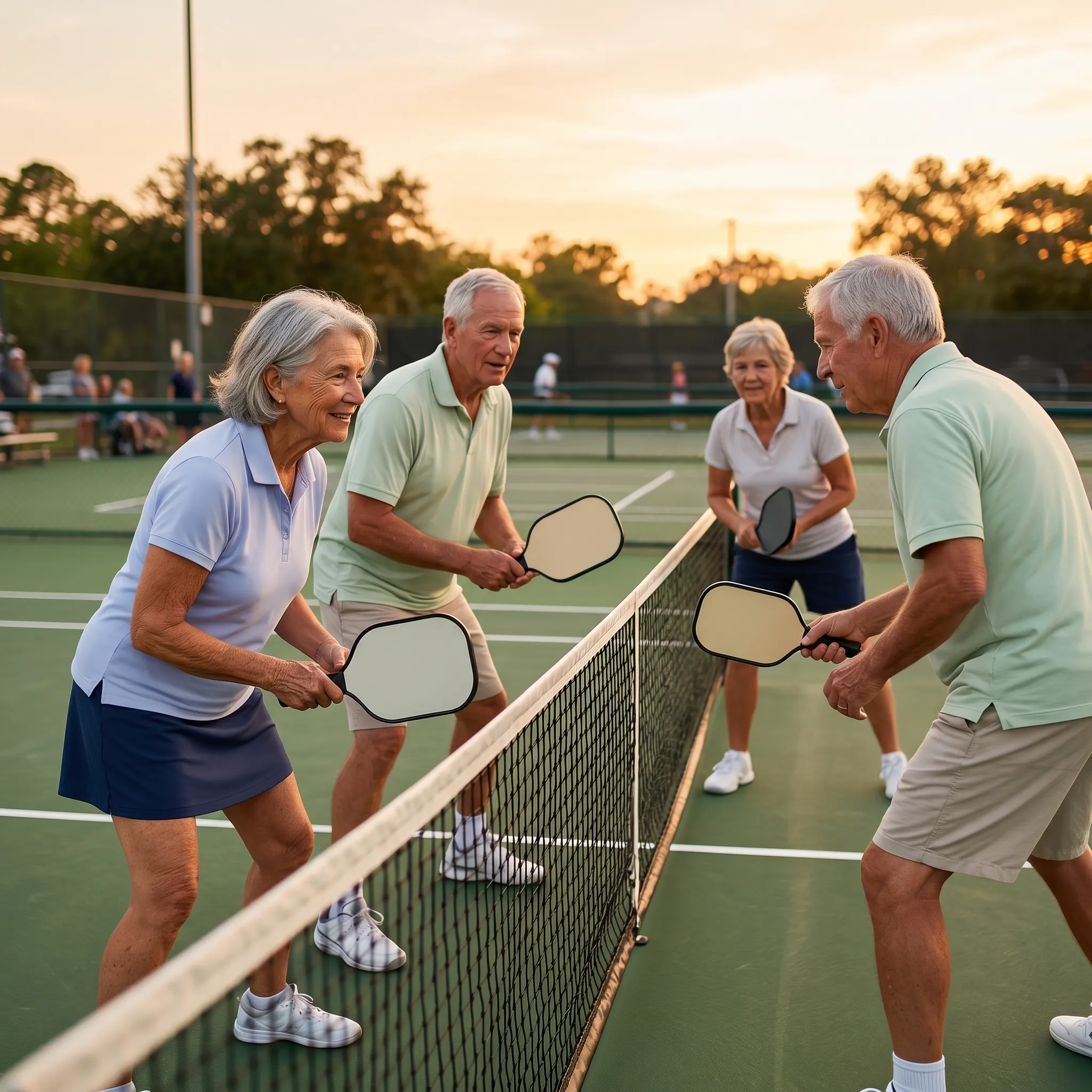
Pickleball, Pain, and Plantar Fasciitis: A Highland Lakes Player’s Guide
And then your heel started hurting.
The first step out of bed feels like stepping on glass. Long rallies leave your foot aching for the rest of the day. You’ve cut back on play but the pain isn’t going away. Now you’re worried about whether you’ll have to give up the sport entirely.
You won’t. But you need to understand what’s happening and treat it the right way.
I’ve spent 30+ years as a board-certified foot and ankle surgeon, with more than 40,000 patients treated at Marble Falls Podiatrist. Pickleball-related foot pain is one of the most common things we see in active patients across the Highland Lakes — and it’s almost always treatable without surgery and without ending your playing days.
Why pickleball is hard on the foot
Pickleball is deceptively physical. The court is small, but that’s part of the problem — every shot involves quick lateral movement, sudden starts and stops, pivots, and rapid changes of direction. The dink-and-drive rhythm shifts your weight constantly from heel to forefoot and side to side.
For an active adult in their 60s, 70s, or beyond, that pattern stresses the foot in ways that walking, hiking, or even tennis don’t. Common consequences:
- Plantar fasciitis. The plantar fascia takes the brunt of the heel-to-toe push and the lateral cutting. It’s the single most common pickleball foot injury we see.
- Achilles tendinopathy. Repeated push-off from the back foot during forehand shots loads the Achilles. After enough sessions, the tendon starts to complain.
- Ankle sprains. The lateral movement and quick stops make rolled ankles common, especially on outdoor courts with uneven surfaces.
- Stress fractures. Bones — especially the metatarsals — accumulate microdamage from repetitive impact. Stress fractures can develop without a specific injury moment.
- Forefoot pain and capsulitis. All that forefoot loading inflames the joint capsules at the base of the second and third toes.
- Toenail problems. Hard stops in shoes that aren’t quite long enough cause repeated nail trauma, leading to bruised, lifting, or eventually fungal nails.
The good news: most of these conditions respond well to conservative care when caught early and treated correctly.
Plantar fasciitis is the #1 problem — and it’s usually fixable
If you have first-step morning pain in the heel, pain that flares after pickleball sessions, and pain that gets worse over the day after long play, plantar fasciitis is the leading suspect.
It’s not strictly from pickleball. The underlying problem is almost always mechanical — overpronation, tight calves, inadequate arch support, or a sudden increase in activity that overloaded the fascia. Pickleball was the activity that exposed the mechanical weakness; the weakness was already there.
That’s why treating it as a “pickleball injury” with rest alone usually doesn’t solve it. Rest reduces the symptom temporarily. As soon as you return to play, the pain comes back — because the mechanical cause was never corrected.
The protocol that actually works:
- A custom medical orthotic engineered for your foot. Not an over-the-counter insert, not a Good Feet Store product. A real medical orthotic redistributes load away from the inflamed fascia and corrects the overpronation that caused the problem.
- Shockwave therapy and Class IV laser. Both support tissue repair without the destructive effects of repeat cortisone.
- Targeted stretching for the calf and plantar fascia.
- Footwear modification. Pickleball-specific shoes, not running shoes, not cross-trainers. (More on this below.)
- Selective activity modification during the acute phase — not full rest.
Most plantar fasciitis patients who follow the full protocol are out of significant pain within 8 to 12 weeks. The relief is durable because the cause has been addressed. For the full clinical picture, see our page on non-surgical heel pain protocol.
Achilles tendinopathy — handle it differently
The second most common pickleball foot complaint is Achilles tendinopathy: pain and stiffness on the back of the heel that’s worst on stairs, inclines, and the first few steps in the morning.
Achilles tendinopathy is critical to treat correctly. Cortisone injections directly into the Achilles tendon are typically avoided — they can weaken the tendon and increase rupture risk. Patients who’ve received Achilles injections elsewhere should mention this at evaluation.
The right approach involves eccentric strengthening, shockwave therapy, Class IV laser, calf stretching, footwear modification, and sometimes a heel-lift insert. With consistent treatment, most Achilles tendinopathy resolves over 2 to 4 months. See our page on Achilles tendonitis treatment for more detail.
Shoes matter more than most pickleball players realize
The single most overlooked variable in pickleball foot pain is the shoe.
Running shoes — including the well-known brands — are designed for forward motion, with stiff outer soles and minimal lateral support. They’re a poor match for pickleball’s quick-change-direction demands. Court shoes designed for tennis or pickleball specifically provide lateral stability, lower stack height, and a sole pattern built for court surfaces.
Patients regularly come in convinced their feet are the problem when the real fix is a $130 court shoe. We can’t sell you shoes — but we can tell you whether your current ones are part of the issue.
When to come in versus push through
Most pickleball foot pain responds to early conservative care. Don’t wait until you can’t play.
Come in when you notice:
- Heel pain that’s there for more than two weeks
- Pain that’s gotten worse despite cutting back on play
- Sharp pain with a specific movement (often a sign of partial tendon injury)
- Recurring ankle sprains
- A sudden onset of intense pain that didn’t have a specific injury moment (possible stress fracture)
- Toenail problems that aren’t resolving on their own
The earlier we evaluate, the simpler the treatment is. Plantar fasciitis caught at four weeks is much easier to resolve than plantar fasciitis you’ve had for six months.
What an evaluation looks like
A first visit at Marble Falls Podiatrist takes about an hour and includes a full history and goals review, biomechanical evaluation, in-office digital X-rays reviewed with you on-screen, diagnostic ultrasound where soft-tissue involvement is suspected (particularly useful for Achilles and plantar fascia), an orthopedic strapping/taping test that predicts how well a custom orthotic and the full protocol will perform, and an honest, spoken-out-loud assessment.
You leave with a complete picture of your options and the time to make the decision that’s right for you. We also see athletic-injury patients through our sports and tendon injury care service, and you can review the full range of foot and ankle conditions we treat.
We treat pickleball patients from across the Highland Lakes and Hill Country, including Marble Falls, Burnet, Kingsland, Horseshoe Bay, Granite Shoals, Lakeway, Bee Cave, Spicewood, and the surrounding Austin area. Many of our patients found pickleball later in life and are determined to keep playing — and the protocols we use are built to make that possible.
The bottom line
Pickleball foot pain is real, it’s common, and it’s fixable. The patients who get back on court without giving up the sport are the ones who address it early, identify the mechanical cause, and follow a durable conservative protocol — not the ones who keep playing through worsening pain hoping it’ll go away.
You don’t have to live with foot pain. And you almost certainly don’t have to give up pickleball to get rid of it.
Schedule a Heel Pain Evaluation
Book Your Heel Pain Evaluationor call (830) 265-6000 to speak with our team directly.