
A Different Kind of Foot and Ankle Care
Conservative, Non-Surgical Podiatry — Serving Marble Falls and the Highland Lakes
If you’ve already been told you need surgery — or you’ve seen a podiatrist who barely examined you before recommending a quick injection, an off-the-shelf insert, or a procedure — you know how frustrating modern foot care can feel. We do it differently here. We look for what’s actually causing your pain. We treat the cause, not just the symptom. And we keep 95% of the patients who walk through our door out of the operating room.
Medicare and most major insurance plans accepted.
Why Most Foot Pain Doesn’t Need Surgery
Most foot and ankle pain is mechanical. Muscles, tendons, fascia, and joints get overloaded — usually because of the way you’re walking, the structure of your foot, or both. When you correct the loading pattern, the pain almost always resolves.
Surgery has its place. For a small percentage of patients with structural problems that conservative care genuinely can’t fix, it’s the right answer. But it should be the last resort, not the first option — and certainly not the option offered after a ten-minute exam.
Dr. Henry is a board-certified foot and ankle surgeon. He is more than qualified to operate — and in 95% of cases, he chooses not to.
What Makes Our Approach Different
Three things separate how we practice from what most patients have experienced before they find us.
We diagnose the cause, not just the symptom.
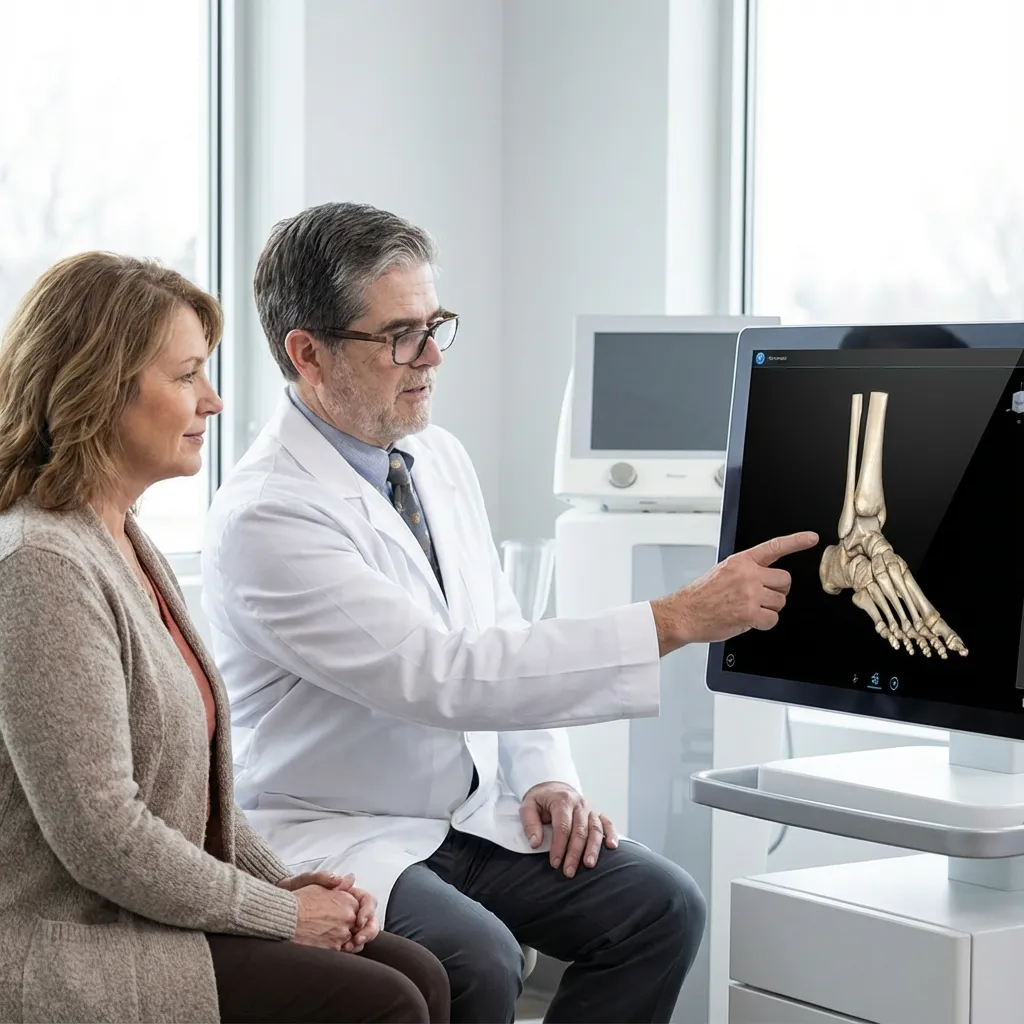
Most foot pain has a mechanical origin you can see — if you actually look. We use weight-bearing digital X-ray and live diagnostic ultrasound at every first visit. Bone alignment, tendon condition, fascial thickening, joint integrity. You’ll see your own images on screen. We’ll explain what we find in plain language. No vague “it’s tendonitis, take these and rest.”
We treat the system, not just the site.
Pain in your heel may be coming from a collapsed arch. Pain in your ankle may be coming from how you load your hip. We assess your whole biomechanical chain — gait, stance, muscle balance, foot structure — because treating the painful spot in isolation is why so many patients end up back in a doctor’s office months later, frustrated that their previous treatment “worked for a while.”
We use the right tool, not the default tool.
Custom medical orthotics, shockwave therapy, therapeutic laser, advanced restorative injections, diagnostic and therapeutic taping protocols, targeted referrals when appropriate. You get a plan built for the way your foot is loading, the way you move, and the things you want to get back to doing. Not the same protocol everyone else gets handed.
“I’m a surgeon. I’m trained to operate. But the most useful thing I do for most of my patients is find the reason they’re hurting — and fix it without ever picking up a scalpel.”
— Dr. Frank J. Henry, DPM, FACFASWhat Your First Visit Looks Like
About an hour. Here’s what happens.
We listen first. Your history. What you’ve already tried. What’s actually changed in your life because of the pain — the walks with the dog you’ve cut short, the stairs you’ve started avoiding, the round of golf you skipped last weekend. We want to know what you want back.
We perform a focused biomechanical examination. Foot and ankle range of motion, muscle testing, structural assessment with the foot off the ground. A great deal of how your foot is functioning — what’s tight, what’s weak, where it’s loading wrong — becomes clear from a careful hands-on exam alone. When watching your gait adds something useful, we do that too; when it doesn’t, we don’t waste your time on it.
We take digital X-rays in office, on weight-bearing positions, and we review them on screen with you. The way your bones align under your own body weight tells us things a non-weight-bearing image never could. You see what we see.
Where appropriate, we use live diagnostic ultrasound to look at soft tissue in real time. Tendons, fascia, nerves — visible, immediately. This is something most local podiatry offices don’t offer, and it changes diagnosis dramatically.
We apply orthopedic strapping or taping. The tape is diagnostic — how well it relieves your pain predicts how well you’ll respond to a custom orthotic protocol. It’s also therapeutic — many patients walk out feeling immediate relief.
We give you our honest assessment, out loud. Surgery is rarely Plan A here — and it’s almost never Plan B, C, or D either. On the rare occasion we genuinely believe it’s the right answer for you, we’ll tell you directly, and if you’d like, we’ll recommend a surgeon we trust and make the referral. Far more often, we’ll show you the path that gets you better without it.
For most patients, that path starts with the taping we applied during your visit. We’ll typically arrange a follow-up so we can see how you’ve responded, refine the plan, and decide together what comes next — whether that’s custom orthotics, a course of shockwave or laser, advanced injection therapy, or a combination.
What you won’t get is some prewritten handout shoved into your hand on the way out the door. That’s what hospital systems and walk-in clinics do. We talk with you. We answer every question you have. And when a follow-up makes sense — which it usually does — we book it before you leave.
When Surgery Is the Right Answer
Conservative care isn’t ideology. It’s the result of 30+ years of careful observation, clinical refinement, and continually adjusting what we do based on what actually gets patients better.
But there’s a subset of patients — usually those with severe structural deformity, advanced arthritis, or conditions that have progressed past the window where conservative protocols can succeed — for whom surgery is the right answer. When that’s the case, we say so directly.
What we don’t do is recommend surgery to a patient who hasn’t first been given a real, sustained, expert attempt at non-surgical resolution. That’s the line that separates how we practice from how most podiatry is practiced today.
Who We Treat
Patients come to us from across the Highland Lakes — Marble Falls, Kingsland, Burnet, Horseshoe Bay, Granite Shoals, Cottonwood Shores — and from across Hill Country, often specifically because of how we practice.
Our patients are people who are still doing things. Walking the dog every morning. Working in the yard. Eighteen holes on the weekend. Standing through a grandkid’s recital. Keeping up with a remodel, a ranch, a household. Most are in the second half of life — though pain doesn’t pick a decade, and we treat plenty of patients who are younger and just as determined to stay active.
Many have been told, by someone who didn’t really look, that their pain is “just aging.”
It usually isn’t.
What Our Patients Say
“I’d seen two other podiatrists for my heel pain over the past year. Each visit was the same — cortisone shot, store-bought insert, told to rest. The pain always came back within a few weeks. Dr. Henry was the first one to actually examine how my foot was loading and explain what was causing the problem. Six weeks into the plan he laid out, I’m back to walking three miles every morning.”
— Carol M., Horseshoe Bay“My ankle had been aching for over a year. I’d been told it was probably arthritis and I’d just have to live with it. Dr. Henry put the ultrasound on it and showed me — right there on the screen — a tendon issue no one had ever mentioned. He treated the actual cause. The pain I’d carried for a year was gone in two months.”
— Janet S., Kingsland“I came to Dr. Henry for a second opinion after another podiatrist recommended bunion surgery. He spent more time examining me in one visit than I’d had in three appointments somewhere else. He laid out a completely different plan. A year later I haven’t had the surgery — and I don’t need it.”
— Denise R., Marble FallsCommon Questions About Our Approach
How is your approach different from a regular podiatrist?
Three things. First, we keep 95% of our patients out of the operating room — Dr. Henry is a board-certified foot and ankle surgeon who chooses, in the vast majority of cases, not to operate. Second, we spend an hour on first visits, not ten minutes. Third, we use weight-bearing digital X-ray and live diagnostic ultrasound at the first visit so we can see exactly what’s wrong instead of guessing — and we explain what we find on screen with you, in plain language.
What if I’ve already been told I need surgery?
Get a second opinion. Many of our patients come to us specifically because they’ve been recommended for surgery elsewhere. We’ll perform a thorough biomechanical evaluation, take a fresh look with our own imaging, and tell you honestly whether we agree with that recommendation. In most cases, there’s a non-surgical path that hasn’t been properly tried. In the rare case surgery genuinely is the right answer, we’ll tell you that too — and we’ll refer you to a surgeon we trust.
What conditions do you treat with this approach?
Heel pain and plantar fasciitis, Achilles tendonitis, bunions and hammertoes, Morton’s neuroma, posterior tibial and peroneal tendonitis, tarsal tunnel syndrome, neuropathy, foot and ankle arthritis, and fungal toenails. We do not perform surgery, treat ingrown toenails, corns, calluses, or diabetic wound care — those are best handled by other specialists, and we’re happy to refer.
Do I need a referral from my primary care doctor?
In most cases, no. Most insurance plans, including Medicare, allow direct access to a podiatrist without a primary care referral. If your specific plan requires one, our team will let you know when we verify your benefits before your first appointment.
Do you accept Medicare and insurance?
Yes. We accept Medicare and most major insurance plans. Our team is happy to verify your benefits before your first appointment — just call (830) 265-6000.